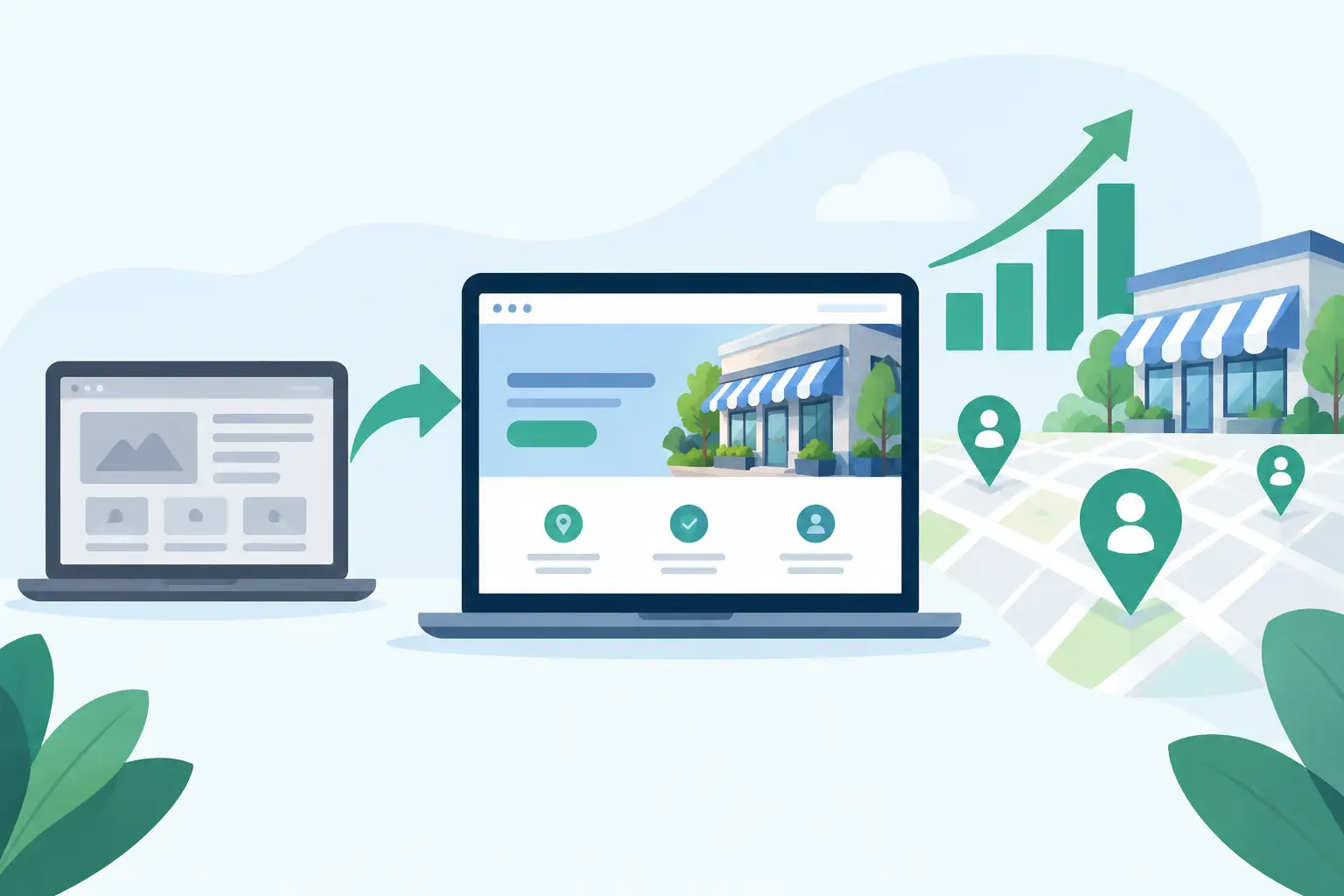
A website can look dramatically better after a redesign and still create the same business problems: calls go unanswered, quote requests land in scattered inboxes, booking details are incomplete, and follow-up depends on someone remembering to do it between jobs. Strong website redesign results are not measured by compliments alone. They show up in better-quality inquiries, faster responses, fewer missed opportunities, and a clearer path from first visit to paid work.
For local service businesses, that distinction matters. Your website is often the first place a customer decides whether you look established, available, and easy to deal with. But it also needs to support what happens after they choose to contact you.
What Website Redesign Results Should Actually Mean
A redesign should improve the customer experience and the way your team handles the work that follows. The right priorities depend on your business model. A restaurant or activity venue may need clear hours, real-time booking availability, event information, and easy mobile reservations. A contractor may need qualified quote requests, service-area details, project photos, and a reliable process for turning inquiries into estimates.
In both cases, the website needs to do more than present information. It needs to move a customer toward a useful next step and pass the right details to the people responsible for responding.
The most valuable results usually fall into three connected areas: more relevant traffic, more completed inquiries or bookings, and better lead handling once someone reaches out. A redesign that improves only one area can help, but the largest gains tend to come when all three work together.
More relevant visitors
Traffic volume alone can be misleading. Ten thousand visitors from outside your service area are less useful than 200 people who need your service, understand what you offer, and are ready to make contact.
A redesign can improve relevance by making your services, locations, service areas, and customer types clear. It can also give search engines and paid campaigns stronger pages to direct people toward. If someone searches for a specific service in your area, they should land on a page that answers their questions without forcing them to hunt through a generic homepage.
More completed actions
Visitors who are interested still need a reason and a simple way to act. Clear calls to action, mobile-friendly forms, click-to-call options, booking tools, and visible response expectations all make a difference.
The goal is not to put a contact button everywhere without thought. It is to make the next step fit the customer’s situation. A person requesting a kitchen renovation may be willing to share project details and upload photos. Someone with an urgent plumbing issue may only want to call. A good website gives each person a practical route forward.
Better follow-through after the form or call
This is where many redesigns lose value. An inquiry form that sends an email to a general inbox may technically work, but it does not guarantee a response, assign ownership, or capture context for future follow-up.
When a website is connected to your CRM, scheduling process, phone handling, or automation, new leads can be organized immediately. The customer receives confirmation. Your team sees what service they want and how they contacted you. Follow-up tasks can be assigned instead of left to chance. For busy businesses, this is often the operational improvement that matters most.
Measure Website Redesign Results Before Launch
You cannot judge improvement if you do not know where you started. Before rebuilding the site, establish a baseline for the numbers that reflect actual business activity.
Start with how many inquiries, calls, bookings, quote requests, and sales conversations the current site generates. Then look at the quality of those leads. Are they located in your service area? Do they request the work you want more of? How long does it take your team to reply? How many leads receive no response at all?
Website metrics still have a place. Page speed, mobile behavior, search visibility, engagement, and conversion rates can reveal where friction exists. But they are supporting measures, not the finish line. A lower bounce rate is encouraging. More booked consultations or approved estimates are more meaningful.
Set expectations over a reasonable period. Search visibility can take time to build, particularly if the old site has weak service pages or unclear local signals. Paid campaigns may produce quicker feedback, but only if landing pages and lead handling are ready. For many businesses, the first 30 to 90 days after launch reveal the initial patterns, while stronger results build over the months that follow.
Build Around the Real Customer Journey
The best redesign decisions come from looking at how customers actually choose and contact your business. This is not an exercise in adding every feature available. It is about removing obstacles at the moments that matter.
A potential customer often wants quick answers: What do you do? Do you serve my area? Can you handle my type of job? What will happen when I reach out? Can I trust you?
Your website should answer those questions with direct language, current visuals, clear service pages, customer proof, and practical contact options. For businesses serving more than one language community, bilingual content and communication options should be planned from the beginning, not added as an afterthought.
The journey continues after contact. If you offer appointments, customers should be able to request or book an appropriate time without back-and-forth messages. If estimates are part of the sale, the team should be able to collect the information needed to prepare one. If phone calls are a major source of business, unanswered calls need a plan - whether that means routing, call-back workflows, or an AI receptionist that can capture details outside regular hours.
A polished website with disconnected operations creates a better first impression, but it can also expose the same old bottlenecks. A connected build addresses both.
Common Reasons a Redesign Underperforms
A redesign can miss the mark when it focuses too heavily on appearance and too little on business decisions. Visual quality matters. Customers do judge credibility quickly. But a modern design cannot compensate for unclear offers, weak calls to action, slow response times, or an inquiry process that asks too much too soon.
Another common issue is treating the launch as the end of the project. A website needs review after real people begin using it. Are customers abandoning a form on mobile? Are they asking questions the site should answer? Is one service page attracting leads while another receives little attention? Small adjustments after launch can have a meaningful effect.
It also depends on what is changing around the website. If a company redesigns its site but keeps outdated photos, inconsistent branding, and a slow manual follow-up process, results may be limited. On the other hand, a business does not need every advanced system on day one. The practical approach is to prioritize the biggest source of lost revenue or wasted time, then build from there.
A Better Standard for Website Redesign Results
Ask a simple question: after this redesign, will it be easier for the right customer to choose us and easier for our team to handle that customer well?
If the answer is yes, the project is moving in the right direction. That can mean clearer service information, stronger local visibility, more calls being answered, fewer incomplete inquiries, automated appointment reminders, or a more organized process from quote to invoice.
At NorthPeak, a website is planned as part of the wider system that brings in, organizes, and serves customers. The design needs to reflect the quality of your business. The workflow behind it needs to support the promises the design makes.
A successful redesign should give your customers confidence before they contact you, and give your team a cleaner way to respond once they do. That is where a better website becomes a better day-to-day business operation.