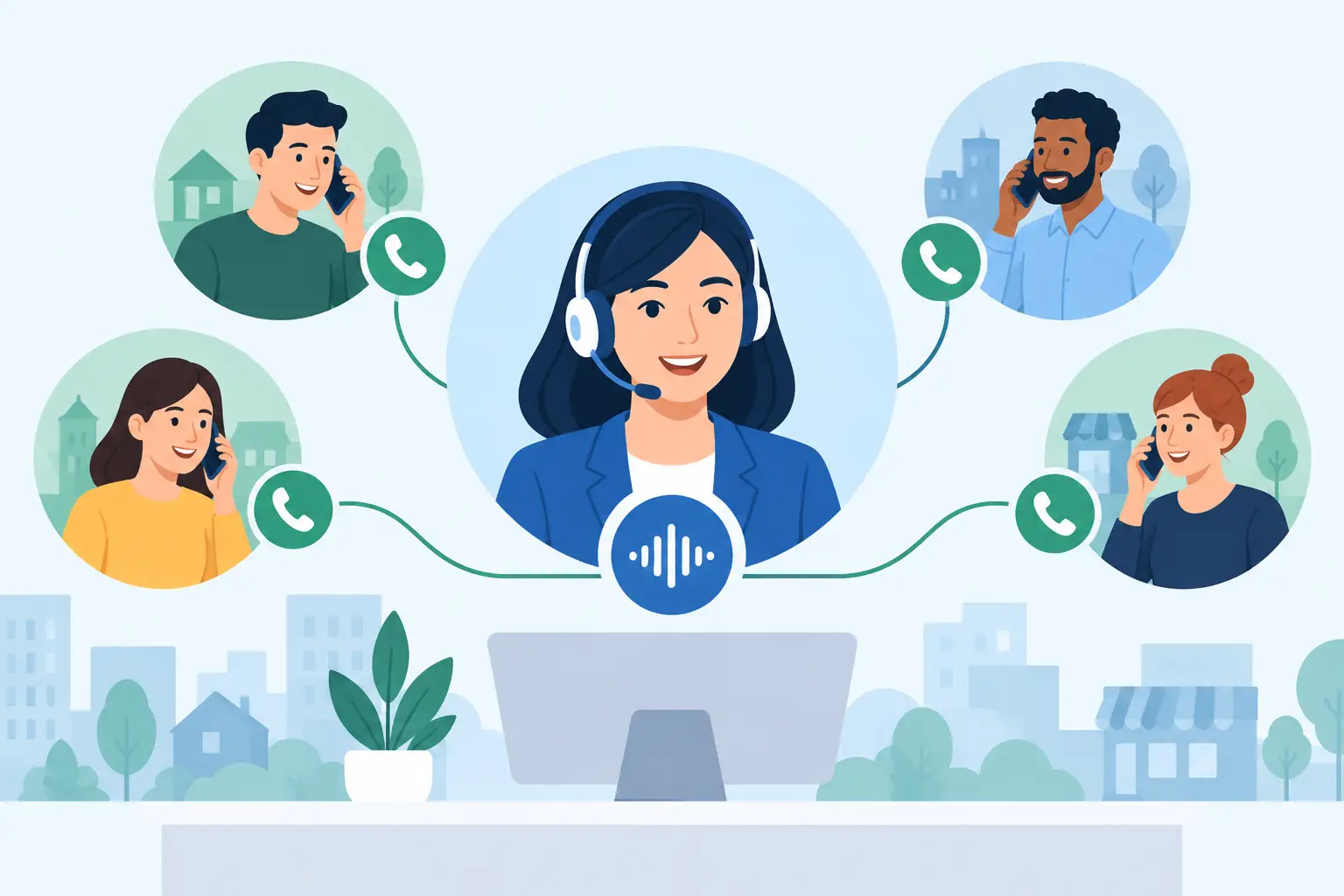
The phone rings while your team is on a job site, with a customer, or driving between appointments. By the time someone can call back, that person may have booked a competitor. An AI receptionist gives local businesses a practical way to answer more calls, collect the right details, and move each inquiry into an organized next step.
For service businesses, a missed call is rarely just a missed conversation. It can be a repair request that needs quick attention, a quote opportunity, a table reservation, or a new patient trying to book. The real value is not simply having a voice answer the phone. It is making sure the caller receives useful help and your team receives information they can act on.
What an AI Receptionist Actually Does
An AI receptionist is a phone system that can speak with callers using your business information, answer common questions, collect lead details, route urgent requests, and help customers book appointments. It can operate outside business hours, during busy periods, or as the first point of contact for every inbound call.
The best version does not try to replace every human conversation. It handles the repeatable part of the call well, then brings in a person when judgment, empathy, or technical expertise is needed. A homeowner calling about a leaking pipe needs a clear path to urgent help. Someone asking for the status of a custom project may need to speak directly with the team. The system should know the difference.
For an Ottawa-Gatineau business serving customers in English and French, language handling can also matter. A caller should be able to explain what they need comfortably, rather than abandon the call because the first interaction feels impersonal or confusing.
The calls it is well suited to handle
An AI phone receptionist is especially useful for predictable, high-volume call types: new service inquiries, appointment requests, hours and location questions, basic pricing guidance, service-area checks, and requests for estimates. It can ask qualifying questions such as the property address, preferred appointment time, job type, urgency, and best contact method.
Those details can be sent directly into a CRM or job-management process. Instead of relying on a handwritten note or a voicemail that gets heard hours later, the team has a record of the inquiry, the call summary, and the next action. That connection is where the system becomes operationally useful.
Why Call Handling Needs to Connect to Your Workflow
A phone answerer by itself is not a complete solution. If call details end up in a disconnected inbox, the underlying problem remains: leads are still easy to overlook, follow-up is inconsistent, and staff are left copying information between systems.
A better setup connects the phone experience with the tools your business already uses to manage work. When a caller requests an estimate, their information can create a lead record. When they book an appointment, the booking can appear on the right calendar. When a call requires a person, the appropriate team member can receive a clear alert with context rather than a vague message to “call back.”
This is particularly valuable for contractors and home-service teams. A call about a broken furnace, a repainting project, or a kitchen renovation should not follow the same path. The questions asked, the urgency, and the follow-up owner may all be different. A well-planned AI receptionist follows rules that reflect how your business actually operates.
It also supports a more consistent customer experience. The promise made in an ad, on your website, or through a referral should match what happens when someone calls. If your website says customers can request a quote quickly, the phone process should capture the information needed to start that quote. If your booking page displays availability, the phone system should not offer times that are no longer open.
Where an AI Receptionist Helps Most
The right use case is not always “answer every call with AI.” For some businesses, the biggest improvement comes after hours, when there was previously only voicemail. For others, it is during the day, when office staff are regularly interrupted by calls that could be handled without pulling them away from customers or scheduling.
Consider a dental office that wants to collect appointment requests after closing, while routing existing patients with urgent concerns according to a defined protocol. Or a landscaping company that receives a burst of spring inquiries while crews are in the field. Or a restaurant that wants to answer reservation and event-space questions without making staff choose between the dining room and a ringing phone.
In each case, the goal is straightforward: fewer abandoned calls, faster initial responses, and cleaner information for the next person involved.
There is a capacity benefit, too. A receptionist can handle one call at a time. An automated phone system can manage multiple callers according to the rules you set. That does not mean every caller should be kept in an automated conversation. It means a busy business has a dependable first response when demand exceeds the front desk’s capacity.
What It Should Not Be Asked to Do
An AI receptionist works best when its responsibilities are clearly defined. It should not invent prices, promise turnaround times your team cannot meet, provide specialized advice beyond approved guidance, or handle sensitive complaints without an escalation path.
For example, a contractor may want the system to provide a starting range for a standard service, but not quote a complex renovation over the phone. A medical or legal practice will have stricter privacy and intake requirements. A business with highly customized work may use AI primarily to qualify leads and schedule consultations rather than answer detailed technical questions.
The trade-off is simple: the more freedom the system has, the more carefully it needs to be designed and reviewed. A generic script may sound acceptable, but it often fails when callers ask questions that matter to your business. Clear boundaries make the experience more accurate and more trustworthy.
Building an AI Receptionist Around Real Calls
A useful implementation starts with the calls you receive now, not a generic technology demo. Review missed calls, voicemail messages, intake forms, and common staff interruptions. Look for patterns: what customers ask, what information your team always needs, where calls get delayed, and which requests should be treated as urgent.
From there, define the call paths. A new lead might be asked for their name, location, service needed, and preferred time for a consultation. An existing customer might be directed to scheduling, billing, or a project contact. An emergency call might be forwarded immediately, with the caller told exactly what will happen next.
The voice and wording deserve attention as well. Callers do not need a theatrical robot or a long explanation of the technology. They need a helpful greeting, concise questions, and a clear next step. If the system identifies itself as an automated assistant, it should do so plainly. Transparency is better than trying to create the impression that every call is handled by a live person.
Testing should include real-world interruptions and imperfect answers. People may call from noisy vehicles, use different names for the same service, speak quickly, or change their minds mid-call. Review recordings and call summaries during the early period, then adjust the prompts, routing rules, and knowledge base. The first version should be treated as a working process, not a finished script.
Measuring Whether It Is Working
Success is not measured by how many calls the AI handles alone. Look at the business outcomes: fewer missed calls, more qualified leads captured, faster response times, more appointments booked, and fewer administrative interruptions for staff.
You may also find useful signals in the calls that get escalated. If people frequently ask a question the system cannot answer, that may point to missing website information, unclear service descriptions, or a process your team has never formally defined. Phone data can reveal operational gaps that were previously hidden in voicemails and scattered conversations.
NorthPeak approaches AI phone reception as one part of a connected customer-acquisition and operations system. When call handling, booking, CRM records, reminders, estimates, and follow-up work together, your team spends less time chasing details and more time serving customers.
The practical question is not whether an AI receptionist can answer your phone. It is whether every answered call has a reliable place to go next. Build that path well, and a ringing phone becomes organized work instead of another interruption.