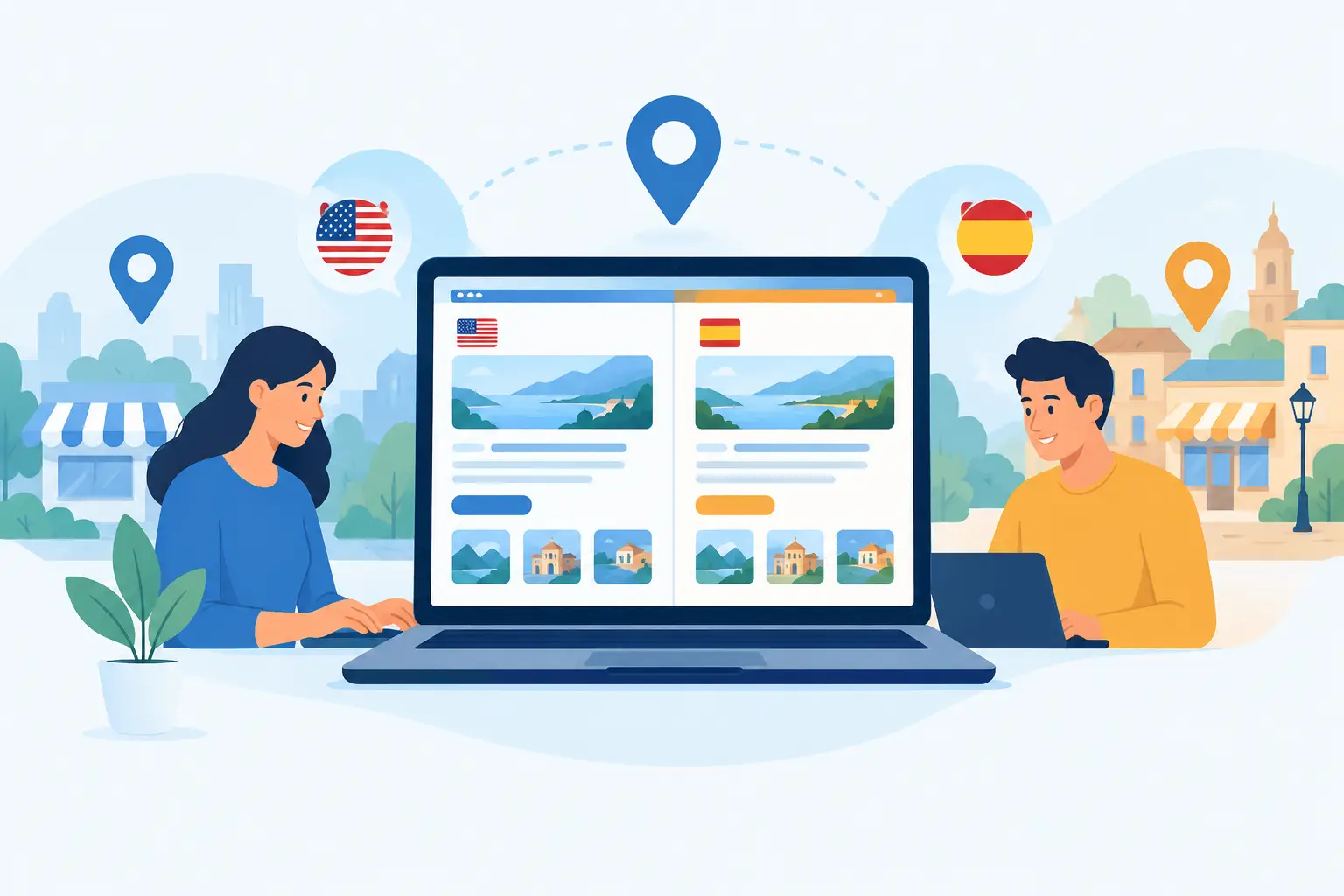
A customer lands on your website after searching for a contractor, restaurant, clinic, or service provider nearby. They are ready to call or request a quote, but the page is only available in the other official language. For Ottawa-Gatineau businesses, bilingual website design services are not a decorative add-on. They are part of whether a customer feels welcome enough to take the next step.
A good bilingual site does more than translate words. It gives English- and French-speaking customers the same clear path to learn about your business, check availability, request service, book an appointment, or call your team. It also needs to connect those actions to the way your business actually operates after the inquiry comes in.
Why bilingual websites affect more than visibility
Businesses often think about bilingual websites as a compliance question or an SEO project. Both can matter, depending on your industry, audience, and location. But the more immediate issue is customer confidence.
If a homeowner in Gatineau needs an estimate and sees a polished French page, clear service details, and a simple quote form, they can move forward without friction. If that form disappears into an unmonitored inbox or the follow-up is delayed for two days, the website has still failed to do its job. The same is true for an Ottawa customer who calls after hours and gets no response.
The strongest bilingual websites support the full customer journey: discovery, inquiry, booking, confirmation, service, payment, and follow-up. The language experience needs to be consistent at every stage where the customer interacts with your business.
That does not mean every business needs a large, complex site with dozens of translated pages. A local electrician may need focused service pages, a service-area page, a quote request form, and clear contact options in both languages. A restaurant or event venue may need menus, event information, reservations, private booking details, and automated confirmations. The right scope depends on how customers buy from you.
What bilingual website design services should include
Translation is one part of the work, but it is not the whole project. A useful bilingual website is designed around two audiences from the start, rather than built in one language and patched together later.
Content that sounds local in both languages
Direct translation can produce wording that is technically correct but awkward, vague, or too formal for the customer. Service descriptions should sound natural to the person reading them. Calls to action should be just as clear in French as they are in English. Details such as service names, trade terms, location references, pricing language, and booking instructions deserve review from someone who understands the local market.
This matters especially for businesses that rely on trust. A customer deciding who to invite into their home, hire for an event, or call for an urgent repair is reading for signs of professionalism. Unclear language works against that confidence.
Navigation that makes language choice obvious
Visitors should be able to switch languages easily from any important page. The language selector should be visible, labeled clearly, and lead to the matching page whenever possible. Sending someone from a French service page to the English home page creates unnecessary work and can cause them to leave.
Navigation also needs to account for differences in page length and wording. French copy can take more space than English copy. Buttons, menus, banners, and mobile layouts should be designed with that reality in mind, not tested only after the site is nearly complete.
Forms, booking, and confirmations in both languages
A bilingual website stops being useful when the contact form, calendar, automated email, or text confirmation switches back to one language. These are the moments that turn interest into a real inquiry, so they need the same level of care as the pages themselves.
For example, a visitor who selects French should be able to submit a French quote request and receive a French confirmation. Your team should see the inquiry in one organized place, with the customer’s preferred language visible. That makes it easier to assign the right follow-up, respond promptly, and avoid asking customers to repeat themselves.
Phone handling that respects the customer’s choice
Many local service businesses still receive their best leads by phone. A bilingual website should not push callers into a dead end after hours or during a busy workday. Depending on your operation, this may mean clear bilingual call routing, a receptionist workflow, or an AI phone receptionist that can answer common questions, collect details, and direct urgent calls appropriately.
The goal is practical: fewer missed opportunities and a better first interaction. Technology should support your staff, not create another system they have to babysit.
Build the website around the way your team works
A polished website can generate more leads than your team is prepared to handle. That is a good problem only if there is a clear process behind it.
Before a bilingual site is designed, map what happens after a person fills out a form, books online, or calls. Who gets notified? How quickly do they respond? Where is the lead stored? Does the customer receive an automatic acknowledgment? What happens if the request is submitted outside business hours? Is there a process for estimates, approvals, scheduling, invoices, and review requests?
When these answers are unclear, businesses end up with scattered inboxes, handwritten notes, missed follow-ups, and customers who have to call twice. A connected setup can route bilingual inquiries into a CRM, notify the appropriate team member, trigger the correct confirmation, and keep customer history attached to the job. For an owner, that means less time chasing information and more confidence that requests are being handled.
NorthPeak approaches this work as a connected customer-acquisition and operations system, not a standalone website project. That may include the website, but also the forms, booking flow, phone handling, CRM, follow-up automations, and marketing assets that support it.
Common mistakes that make bilingual sites underperform
The most common issue is treating the French version as secondary. It may launch weeks later, contain fewer pages, or miss recent updates made to the English site. Customers notice when one side of the business appears less current.
Another problem is duplicating content without considering search behavior. English- and French-speaking customers may use different terms when looking for the same service. Your page structure, headings, titles, and service descriptions should reflect natural searches in both languages. This is not about repeating keywords. It is about helping the right customer understand that you serve their need in their language.
Businesses also underestimate ongoing maintenance. A new promotion, seasonal hours, service-area change, staff announcement, or policy update needs to be reflected across both versions. Decide early who is responsible for updates and how they will be reviewed. A maintenance plan can be worthwhile when your site changes frequently, while a stable business may only need occasional support.
Finally, avoid adding tools because they sound advanced. Online booking is useful when customers can choose from real availability and your team has a process to manage appointments. Automated reminders are useful when missed appointments cost you money. An AI receptionist is useful when calls are regularly missed or staff are tied up serving customers. The best system is the one that solves a clear operational problem.
A practical process for a bilingual website project
Start with a working conversation about your customers, not just your preferred colors or a list of pages. Identify the services that drive the most revenue, the areas you serve, the questions customers ask before contacting you, and the points where leads are currently lost.
From there, define the website’s primary actions. A contractor may prioritize quote requests and phone calls. A venue may prioritize tours and event inquiries. An appointment-based business may need online booking with reminders and intake forms. Those decisions shape the site map, content, technology, and reporting.
Then plan both language versions together. Review the English and French page structure, approve content direction, and test every important customer path on desktop and mobile. Test forms, confirmation messages, booking notifications, phone prompts, and internal notifications. A site is ready when a real customer can complete the next step without needing to translate, guess, or wait for someone to manually sort out their request.
Bilingual design is worth doing carefully because it signals something larger: your business is ready to serve the community it operates in. When customers can find the right information, contact you in their preferred language, and receive a timely response, the website becomes more than a brochure. It becomes a dependable front door for your business.