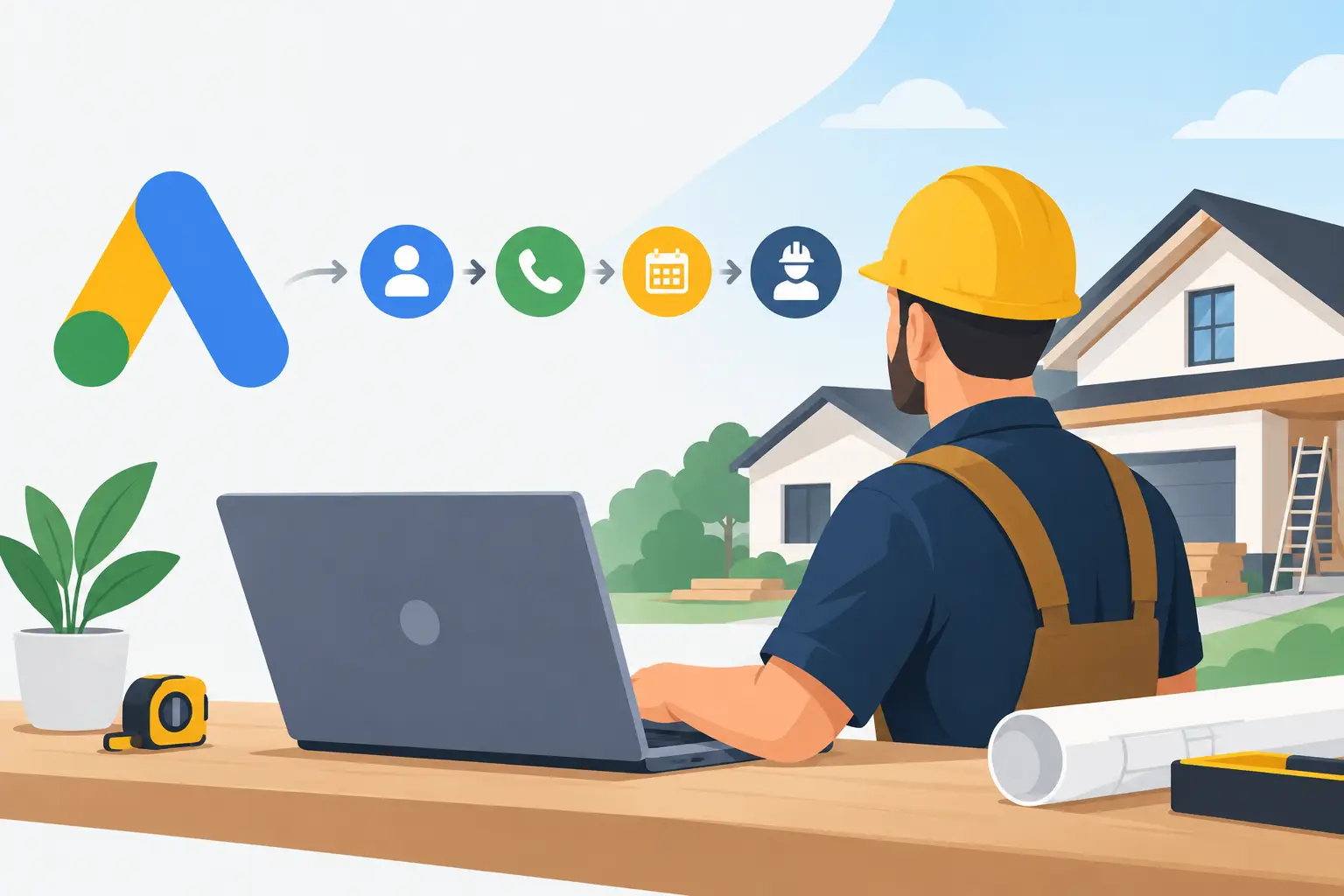
A homeowner with a burst pipe, a failing furnace, or a roof leak is not casually browsing. They are looking for a contractor who can respond, explain the next step, and show up. Google Ads for contractors can put your business in front of that customer at the right moment, but an ad alone does not create a booked job. The whole path matters: the search, the call, the estimate, and the follow-up.
For busy service businesses, the goal is not simply more leads. It is more of the right calls, fewer wasted inquiries, and a process your team can handle without leaving customers waiting in voicemail or an inbox.
Start With the Jobs You Actually Want
A broad campaign for “contractor near me” can spend money quickly and produce vague inquiries. Someone may be searching for a general contractor, a handyman, a material supplier, or a job they want done for the lowest possible price. That does not mean broad terms never work. It means they need a clear role in your budget and close oversight.
A better starting point is to build campaigns around high-value services and the areas you can reliably serve. A plumbing company might separate emergency plumbing, drain cleaning, water heater replacement, and bathroom renovation leads. An exterior contractor may distinguish roofing repair from full roof replacement, siding, and eavestrough work. Each service has a different customer need, urgency level, and likely job value.
This structure lets you write ads that match what people are searching for. It also makes it easier to see which services generate profitable work rather than just affordable clicks. If a $40 click leads to a $6,000 job with healthy margins, that may be a strong investment. If the same click consistently produces small jobs outside your service area, it is a warning sign.
Geography deserves the same attention. Ottawa-Gatineau contractors often have real travel boundaries, licensing considerations, language needs, and scheduling limits. A wide radius may look attractive, but it can create long drives and less profitable jobs. Target the neighborhoods, cities, and service zones where your crews can deliver a good customer experience.
Your Ad Has One Job: Earn the Next Action
A good Google ad is direct. It should tell a searcher what you do, where you work, and why they should contact you now. Claims such as “Trusted Local Contractor” can help, but they are stronger when paired with something specific: same-day emergency response, free on-site estimates, licensed technicians, financing options, or a clear service specialty.
The ad should also reflect what happens after the click. Do not promise immediate service if calls are returned the next business day. Do not advertise 24/7 availability if no one can answer after hours. Accurate messaging protects your budget and your reputation.
For many contractors, phone calls are the most valuable conversion. Someone calling about a furnace failure is usually further along than someone filling out a general contact form. Call-focused campaigns can work well during staffed hours, while form submissions and online booking requests may be more appropriate when your team is unavailable.
That distinction matters. A campaign can appear successful in an ad dashboard because it generated many form fills, yet still create frustration if nobody responds until two days later. Speed is part of marketing performance.
The Landing Page Should Continue the Conversation
Sending paid traffic to a generic homepage is one of the most common ways contractors lose good leads. A person who searched for “roof repair” should land on a page about roof repair, not a page that asks them to figure out what your company does.
The page needs to answer practical questions quickly: Do you provide this service? Which areas do you serve? What does the first step look like? Can the customer call, request an estimate, or book a visit? It should also show proof that reduces uncertainty, such as recent project photos, service details, reviews, qualifications, and clear contact information.
Mobile experience is especially important. Most urgent local searches happen on a phone, often between other tasks or from the job site. Large tap targets, visible phone numbers, short forms, and fast loading are not design extras. They remove friction at the point where a customer is deciding whether to contact you or the next contractor in the results.
For bilingual markets, language should be considered before launch rather than patched in later. If you serve English- and French-speaking customers, make it easy for people to find information and request help in the language they prefer. This can affect both conversion rates and the quality of the customer experience after the lead arrives.
Google Ads for Contractors Need Lead Handling Behind Them
An ad campaign cannot compensate for missed calls, scattered leads, or inconsistent follow-up. If your office receives an inquiry but cannot tell who called, what service they need, or whether anyone replied, the campaign becomes difficult to improve.
Every lead should enter one organized process. Calls, forms, quote requests, and bookings should be recorded in one place with a clear owner and next step. A simple workflow may include an immediate confirmation, a task for the right team member, an estimate appointment, and reminders when an estimate has not been approved.
This is where the trade-off between volume and readiness becomes clear. More leads may sound like progress, but a small team can only respond well to a certain number of inquiries. Before increasing ad spend, make sure your staff can answer the phone, qualify the job, schedule the visit, and follow up on open estimates. Otherwise, you may pay to create a backlog of disappointed prospects.
After-hours coverage is another decision point. Some businesses benefit from an AI phone receptionist that can answer common questions, capture service details, and route urgent requests. Others need a live answering process because their work requires immediate technical judgment. The right solution depends on the type of job, your customers’ expectations, and who is available to respond.
Measure Revenue, Not Just Clicks
Clicks, impressions, and cost per lead are useful signals, but they are not the final score. A contractor needs to know which searches lead to qualified estimates, booked work, and profitable jobs.
Track the source of phone calls and forms, then connect those leads to outcomes in your CRM or job management process. Over time, patterns become visible. You may find that one service produces fewer leads but far better close rates. Another may attract price shoppers who rarely book. You may also see that leads from one area regularly become strong repeat customers while another area creates excessive travel time.
Campaigns should be reviewed regularly, especially during seasonal shifts. Emergency services, landscaping, roofing, heating, and renovation work can all change with weather, demand, and crew capacity. The answer is not always to increase budget. Sometimes the best move is to pause a lower-margin service, tighten location targeting, or redirect spend toward work you can schedule and complete well.
Search terms also need regular review. Google will match ads to related searches, which can create opportunities but also waste. If you install windows, you may need to filter out searches from people looking for window cleaning, repair parts, or employment. Clear exclusions help protect the budget for customers who are actually looking for your services.
Build a System, Not a Lead Machine
The strongest contractor campaigns connect marketing with operations. The ad sets the expectation. The landing page makes it easy to act. The call or form reaches the right person. The estimate is sent promptly. The customer receives follow-up without your team having to remember every task manually.
NorthPeak approaches this as a connected customer-acquisition system rather than a standalone ad account. The practical question is always the same: once someone is ready to contact your business, can your process help them move forward without delay or confusion?
Paid search can be a valuable source of work because it reaches people with immediate intent. It is not a replacement for referrals, reviews, a strong website, or dependable service. It works best when those pieces reinforce one another.
Start with the jobs you want more of, give customers a clear way to reach you, and make every inquiry easy to manage. When your advertising and your day-to-day operations are working in the same direction, a good lead has a much better chance of becoming a good customer.